
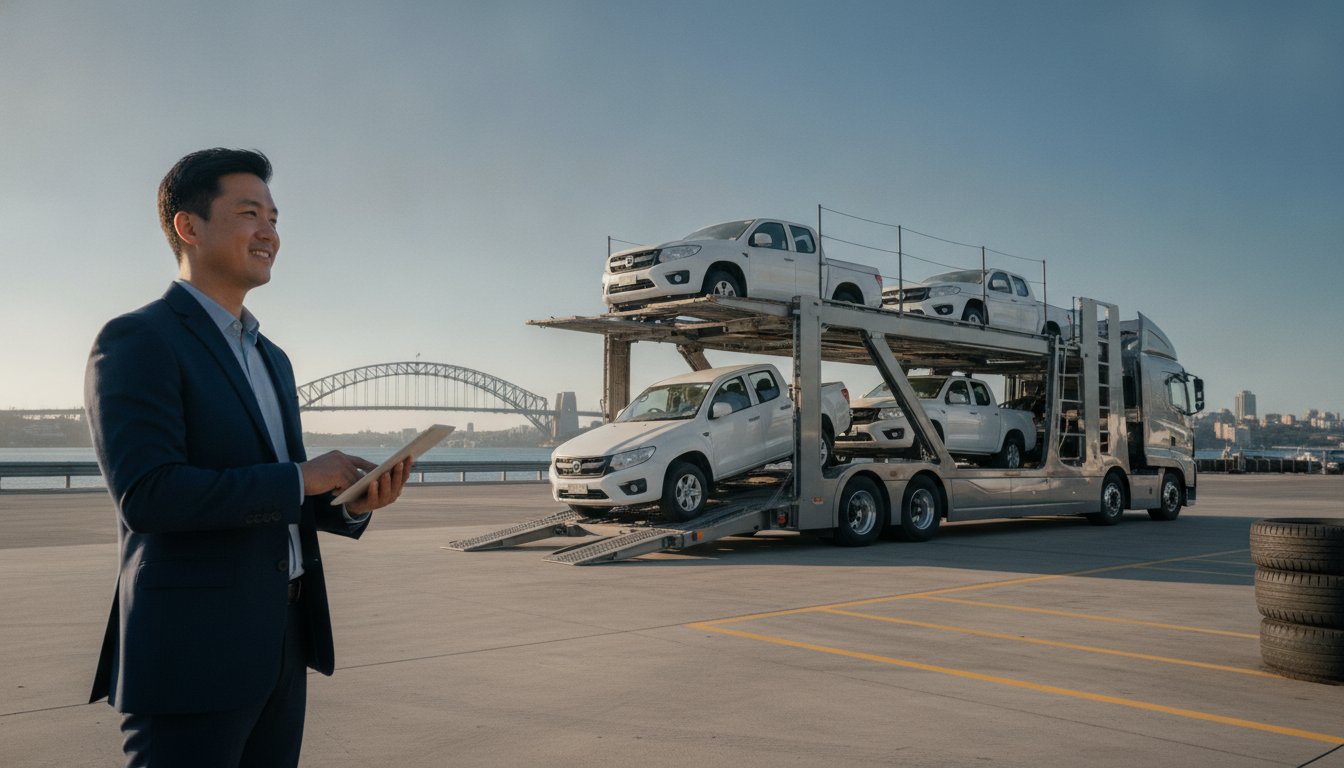
Your fleet is a ticking clock. Every day those idle utes sit in your Sydney yard, they're bleeding value and racking up holding costs. You've probably realised that traditional auction houses are often more trouble than they're worth, especially when you're staring down a mountain of de-branding requirements and NSW Notice of Disposal paperwork. It's frustrating to watch depreciating assets take up space that should be used for growth. You need them gone, and you need the cash in your account yesterday.
We agree that your time is too valuable to spend on "maybe" buyers and endless administrative loops. This guide is your roadmap to mastering fleet disposal logistics in 2026. You will learn how to offload your company vehicles quickly, secure a rapid cash injection, and walk away with zero administrative hangover. We will cover how to navigate the latest 2026 regulations, including the $41 registration transfer fee and the $20,000 instant asset write-off threshold, ensuring you make the smartest move for your balance sheet. It is time to clear the yard and get your capital moving again with a seamless pickup from your Sydney depot.
Key Takeaways
- Learn why waiting for auctions kills your ROI and how to pivot to a faster, direct liquidation model.
- Master the essentials of fleet disposal logistics by managing everything from physical de-branding to digital de-registration in one go.
- Nail your NSW compliance by lodging your Notice of Disposal immediately and clearing PPSR records to avoid legal headaches.
- Streamline your workflow with mobile inspections that come to your Sydney depot, saving you the hassle of coordinating transport.
- Maximise your return by stripping out specialised gear and removing company signage before the final handover.
What is Fleet Disposal Logistics?
Fleet disposal logistics is the engine room of a successful exit strategy. It is not just about selling a few old utes; it is the comprehensive operational process of moving a vehicle from your active roster to someone else's balance sheet. This involves a high-speed chain of events that includes valuation, physical transport, data scrubbing, and final financial settlement. Think of it as the final, critical stage of the Fleet management lifecycle. Getting this right ensures your company capital isn't tied up in depreciating metal.
In 2026, the used car market moves faster than ever. Data from 2025 shows that SUVs now account for 74.18% of transactions. If you are sitting on a fleet of older sedans or niche commercial vehicles, you are racing against a ticking clock. Fleet disposal logistics is your primary defence against market shifts. Waiting for the "right buyer" is a trap that leads to high holding costs. You need a system that prioritises speed over sentimentality to keep your cash flow healthy.
The Three Pillars of Effective De-fleeting
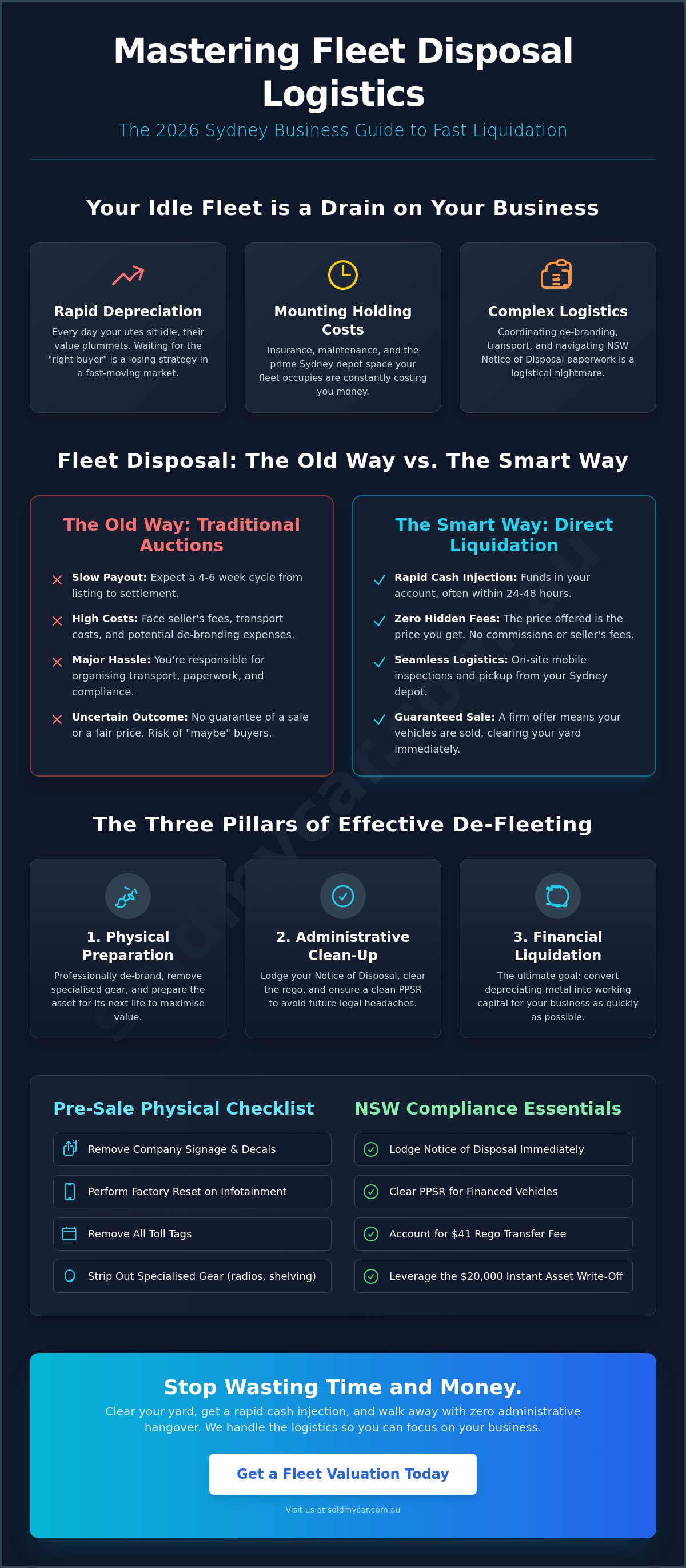
Successful liquidation relies on three distinct phases. If one fails, the whole process stalls. Effective fleet disposal logistics requires a disciplined approach to these pillars:
- Physical Preparation: This is about getting the asset ready for its next life. It includes professional de-branding, removing company decals, and stripping out specialised gear like UHF radios or custom shelving.
- Administrative Clean-up: You cannot just hand over the keys. You must clear the reggo, ensure the PPSR (Personal Property Securities Register) is clean for financed vehicles, and lodge a Notice of Disposal immediately to protect your business from liability.
- Financial Liquidation: The goal is to convert metal into "auto for cash" as quickly as possible. This means avoiding the 4-6 week auction cycle and opting for direct settlement models that put funds back into your account within days.
Why Sydney Businesses Struggle with Logistics
Sydney presents unique challenges for fleet managers. Space is at a premium in metro depots, and every square metre taken up by an idle van is a square metre that isn't earning you money. This creates operational bottlenecks that slow down your entire business. The high cost of "holding" is another silent killer. Between insurance, basic maintenance to keep the battery alive, and rapid depreciation, an idle fleet is a massive drain on resources.
Coordination is the final hurdle. Trying to organise multiple tow trucks or drivers to move a bulk fleet across the city is a nightmare. Many businesses simply don't have the internal bandwidth to manage these moving parts, which is why they end up stuck with assets that should have been liquidated months ago.
The Physical Logistics Checklist: Preparing Your Fleet
Getting your vehicles ready for sale isn't just about a quick wash and a vacuum. It is a methodical strip-down. If you miss a step, you are leaving money on the table or risking your company's reputation. Effective fleet disposal logistics mirrors the high standards seen in global operations like GSA Fleet Management. It requires a clear, actionable checklist to ensure every asset is clean, clear, and ready for a rapid transfer. You want a clean break, not a lingering liability.
Start with a hard look at the condition of each unit. You need to categorise them immediately. Is it a well-maintained prestige car or a high-kilometre salvage job? Knowing the difference determines your liquidation path. For those top-tier assets, you might consider a mobile vehicle purchase to save time on transport. For everything else, get the tools ready. You have work to do before the buyer arrives at your Sydney depot.
De-stickering and Branding Removal
Don't leave your logo on a car you no longer own. If that vehicle is involved in an accident or a traffic dispute after the sale, it is your brand on the evening news. Professional de-branding is non-negotiable. Use a heat gun to soften the vinyl and a plastic scraper to lift the edges. Avoid metal blades; they gouge the paint and tank the resale value. If you have a bulk fleet, it is often more efficient to hire a mobile de-branding service to handle the logistics on-site rather than moving 20 utes to a workshop.
Tech and Tolls: The Often Forgotten Steps
Modern vehicles are rolling hard drives. You must perform a "factory reset" on every infotainment system. Clear the Bluetooth pairing history and delete any saved GPS addresses, especially "Home" or "Office" locations. This protects your drivers' privacy and your company's data security. Next, strip out the hardware. This includes:
- e-Tags: Remove every toll tag and cancel the accounts immediately.
- Telematics: Extract GPS tracking units and disable any remote monitoring software.
- Asset Recovery: Strip out UHF radios, specialised shelving, and bull bars if they are being reused.
- Documentation: Centralise all spare keys and service logs. A missing logbook can slash thousands off a valuation.
Once the tech is out and the stickers are off, your fleet disposal logistics chain is almost complete. You've turned a branded liability back into a generic, high-value asset. Now you just need to decide how to turn that metal into cash without the auction-house headache.
Auctions vs. Direct Purchase: Comparing the Logistics
Auctions are the traditional choice, but in 2026, they are often a logistics trap. You're looking at a 4-6 week window from the moment you decide to sell until the cash actually hits your bank account. That is a massive lag in your fleet disposal logistics chain. During those weeks, your vehicles aren't just taking up space; they are actively losing value. Every day a ute sits in an auction yard is another day of depreciation you'll never get back. In a market with over 321,000 used cars listed as of February 2026, high supply means you cannot afford to move slowly.
Then there are the hidden costs. Most managers look at the commission percentage and stop there. That's a mistake. You need to factor in the transport fees to get the fleet to the yard, the mandatory professional detailing fees, and the auction entry costs. If the vehicles don't meet the reserve, you are stuck with the bill for moving them back to your depot. It is a high-risk, low-speed model that doesn't fit a modern Sydney business. Direct purchase models, often called "auto for cash," simplify everything by removing the middleman and the wait time.
The Real Cost of the Auction Timeline
Think about the math of a 30-day wait. If you are offloading 10 vehicles, a month of depreciation can strip thousands from your total return. You are also paying to insure and maintain those assets while they sit idle. The logistics of a "no-sale" are even worse. If the auction hammer doesn't fall at your price, you have to coordinate the return transport for a bulk fleet. This doubles your handling costs and leaves you right back where you started. Choosing a direct buyer means you trade that uncertainty for a guaranteed result on day one.
Direct Purchasing: The Speed Advantage
Direct purchasing is the shortcut your balance sheet needs. Instead of waiting for an auction calendar, you get a same-day valuation and immediate pickup logistics. This is particularly effective for Sydney metro areas where we can reach your depot quickly. You don't have to worry about the 14-day settlement periods common at auction houses. The payment is processed immediately, giving you a rapid cash injection to reinvest in your business.
To get started, you should look into an Instant Car Valuation Sydney. This gives you a baseline offer based on real-time 2026 market data. It removes the guesswork and allows you to finalise your fleet disposal logistics in hours, not weeks. You get a fair price, we handle the pickup, and the administrative burden disappears. It is a "no-nonsense" approach that values your time as much as your assets.
NSW Compliance: Nailing the Paperwork
Nailing the paperwork is the difference between a clean exit and a year of chasing toll disputes. In NSW, the legal burden of disposal sits squarely on your shoulders. You can't just hand over the keys and hope for the best. Proper fleet disposal logistics involves a paper trail that proves you are no longer the registered owner the second that vehicle leaves your depot. This protects you from liability for future fines or offences, which is a legal requirement confirmed by Transport for NSW (TfNSW) in 2026. If the buyer fails to transfer the reggo within 14 days, they face a $188 late fee, but you are the one who deals with the paperwork headache if the Notice of Disposal isn't filed correctly.
Compliance is also about record-keeping. Under the 2026 updates to the NSW Motor Dealers and Repairers Regulations, licensed dealers are now required to keep the dealer's notice for six years. This is an increase from the previous three-year requirement. When you deal with a professional buyer, you ensure that this documentation is handled with total transparency. It keeps your business audit-ready and ensures every "auto for cash" transaction is legally watertight from start to finish.
The Notice of Disposal (NOD) Process
The Notice of Disposal (NOD) is your primary shield. Lodge it immediately. If you're moving a bulk fleet, use the Service NSW business portal to handle multiple VINs at once. This stops the flow of speeding fines and E-toll charges to your office. One common myth is that you need a current pink slip to sell a company car. This isn't always the case, especially for bulk buy-outs where speed is the priority. For more detail on this, read our guide on How to Sell a Car Without a Roadworthy Certificate in NSW to see how to bypass this administrative bottleneck.
Financial Clearances and PPSR
Financial clearances are the next hurdle. Most fleets are under some form of lease or chattel mortgage. You need a "Letter of Payout" from your financier for every single asset. This document tells the buyer exactly how much is owed to clear the title on the Personal Property Securities Register (PPSR). A buyer cannot legally take ownership of a vehicle with an active encumbrance. You must verify a clear title to ensure a smooth, fast transaction. We handle these logistics every day, ensuring the financier is paid out and the remaining cash lands in your account. If you want to skip the administrative hangover, talk to us about our fleet and corporate vehicle disposal service today.
How Sell My Car Streamlines Your Fleet Logistics
We've walked through the physical preparation, the auction traps, and the compliance hurdles. Now, it is time for the solution. Sell My Car is designed to be the "no-nonsense" alternative to the slow, traditional methods of offloading company assets. We are backed by Cox Automotive, which means we bring global data and massive scale to your Sydney depot. We don't just buy cars; we provide a complete fleet disposal logistics engine that moves as fast as your business does. You get the certainty of a fair price and the relief of a clear yard.
Our approach is built on speed and transparency. We don't care if your fleet consists of pristine luxury sedans or high-kilometre non-runners. We buy the whole lot. From prestige cars to salvage-grade utes, we provide a single point of contact for your entire liquidation. This removes the need to deal with multiple buyers or waste weeks at an auction house hoping for a result that might never come. You get a direct purchase, a rapid cash injection, and an administrative clean slate.
Our Bulk Valuation Process
Assessing a large fleet shouldn't take a month. We can evaluate 5, 10, or 50 vehicles in a single visit. Our team uses data-driven pricing based on real-time 2026 market trends, ensuring our offers are competitive and grounded in fact. This eliminates the "auction floor gamble" where prices can swing wildly based on who shows up on the day. To see how we handle the process on-site, take a look at our Mobile Vehicle Purchase service. We bring the expertise to you, so your team can stay focused on their actual jobs.
The Logistics Handover
The most significant bottleneck in fleet disposal logistics is often the physical move. We solve this by organising all the transport ourselves. You don't need to coordinate drivers, hire tow trucks, or move a single car from your yard. Once the deal is done, we handle the pickup. We also provide hands-on administrative support to ensure your Notice of Disposal (NOD) and reggo paperwork are flawless. It is a seamless transition that protects your liability and clears your balance sheet in record time. Don't let depreciating assets clog up your operations. Get a fleet valuation today and see how quickly we can turn your metal into movement.
Take Control of Your Fleet's Exit Strategy
You now have the roadmap to stop the depreciation bleed. Master your fleet disposal logistics by prioritising speed, nailing your NSW compliance, and avoiding the 4-6 week auction trap. Whether you are offloading five utes or fifty prestige sedans, the goal remains the same: a clean break with zero administrative hangover. You've done the hard work of managing the fleet; now it's time to reap the rewards of a disciplined exit strategy.
We are here to make that transition effortless. As a subsidiary of Cox Automotive Australia, we offer a Sydney-wide mobile inspection service that brings the valuation directly to your depot. We provide immediate payment for bulk fleet liquidations, ensuring your cash flow stays healthy without the typical wait times. Don't let idle assets take up valuable space or drain your resources. Get a Professional Fleet Disposal Quote Now and clear your yard today. It's the smartest move you'll make for your balance sheet this year.
Frequently Asked Questions
How long does the fleet disposal process typically take?
The entire process typically takes between 24 and 48 hours from the initial inspection to the funds landing in your account. Unlike the lengthy auction cycle, our model prioritises speed. Once we agree on a price, we move fast to finalise the paperwork. This rapid turnaround is a core part of efficient fleet disposal logistics, allowing you to reinvest capital into your business almost immediately without the typical month-long wait.
Can I sell fleet vehicles that are still under finance?
Yes, you can absolutely sell vehicles that are still under a lease or chattel mortgage. We coordinate directly with your financier to settle the remaining balance. Once the payout is confirmed, we transfer the surplus equity straight to your business account. This removes the administrative burden from your team and ensures the title is cleared on the PPSR without you having to manage the back-and-forth with the bank.
Do I need to remove company branding before selling to you?
You don't have to remove decals yourself, but we highly recommend it to protect your company's reputation. Leaving branding on a vehicle you no longer control is a liability risk. While we can purchase vehicles with signage intact, we can also discuss professional de-branding as part of the logistics package. This ensures your logos are stripped before the car hits the secondary market, keeping your brand safe and your hands clean.
What is the "Notice of Disposal" and why is it mandatory in NSW?
The Notice of Disposal (NOD) is a mandatory document that informs Transport for NSW that you've sold the vehicle. It is your primary legal protection against future speeding fines, parking tickets, and e-toll charges. Filing this immediately is a non-negotiable step in fleet disposal logistics. It officially ends your responsibility for the asset and ensures the new owner is the one held accountable for any road offences or registration fees.
Do you buy salvage or non-running fleet vehicles?
We buy the entire fleet, including salvage-grade vehicles and non-runners that have seen better days. You don't need to fix them or get them roadworthy before we arrive. Whether it is a high-kilometre work ute or a van with mechanical issues, we provide a fair offer based on its current state. This "one-stop" approach saves you from having to find separate buyers for your prestige units and your scrap metal.
How is the value of a fleet vehicle determined in 2026?
We use real-time 2026 market data to determine a fair price for every asset. This includes looking at current supply levels, auction results, and specific demand for makes and models. For example, we factor in the high demand for SUVs and the growing interest in electric vehicles. Our valuations are transparent and grounded in what's happening in the Sydney market right now, rather than relying on outdated book values.
Can you pick up the vehicles from our Sydney depot?
Yes, we organise the physical pickup and transport from any Sydney depot or business address. You don't need to worry about the logistics of moving a bulk fleet across the city or hiring extra drivers. Once the sale is finalised, our transport team arrives to collect the vehicles at a time that suits your operations. It is a seamless handover designed to get idle assets off your property with zero fuss.